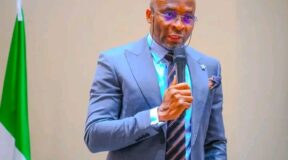
Imagine an Abia South where the rhythm of development beats in harmony, from the Government House in Umuahia to the industrious streets of Aba, down to the oil-bearing communities of Ukwa. Imagine a district where federal representation is not at odds with state leadership, but in perfect alignment. That is the Abia South that could have emerged if Chinedu Onyeizu had taken his place in the Senate in 2023, working hand in hand with Governor Alex Otti.
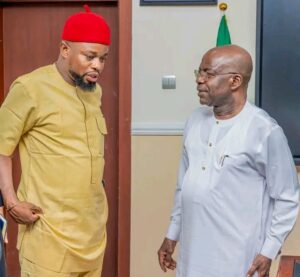
In 2023, the people of Abia State made a bold statement by entrusting governance to a reform-driven leadership under Governor Otti. That same wave carried Onyeizu—a technocrat, a petroleum engineer, and a globally trained professional, whose candidacy inspired hope for a new kind of representation. But what if that mandate had fully materialised at both levels?
Governance thrives on alignment. If Onyeizu had emerged as senator, Abia South would likely have witnessed a rare synergy between state and federal leadership, one driven by a shared development blueprint.
His background in engineering, combined with his exposure to global best practices, would have positioned him as a strategic partner in advancing the governor’s infrastructural and economic reforms.
Federal presence in Abia South would have taken on a new urgency. Critical road infrastructure linking Aba to national networks could have received stronger legislative backing and facilitation. The economic revitalisation of Aba, long envisioned as a manufacturing powerhouse, would have been championed not only at the state level, but vigorously pushed at the Senate through policy advocacy, investment drives, and federal partnerships.
In the oil-producing communities of Ukwa, Onyeizu’s industry experience could have translated into more effective engagement with stakeholders in the petroleum sector. Issues of environmental degradation, underdevelopment, and youth unemployment might have been addressed with informed precision, backed by both technical knowledge and legislative influence.
More importantly, representation would have moved beyond symbolism. With Onyeizu in the Senate, constituency interventions could have been tied directly to Governor Otti’s broader reform agend, ensuring that projects in education, healthcare, and youth empowerment were not isolated gestures, but parts of a cohesive development strategy.
There is also the question of voice. Onyeizu’s profile suggests a senator who would not merely occupy a seat, but one who would engage, articulate, and influence. At the national level, Abia South could have benefited from a representative capable of translating local needs into compelling national conversations, one whose advocacy aligns with a reformist government at home.
The result? A district not struggling to catch up, but one steadily setting the pace. A people not burdened by missed opportunities, but empowered by coordinated leadership.
History may have taken a different turn, but the lesson remains clear: when competence aligns with vision, and representation complements governance, the possibilities for transformation are limitless.
Year 2027 presents another opportunity. With Alex Otti as governor and Onyeizu as senator, Abia South will fare far better.
About The Author