Iran has denied any involvement in an alleged attack on a South Korean cargo vessel in the Strait of Hormuz, even as US President Donald Trump warned that American forces could resume bombing if ongoing diplomatic efforts collapse.
Tehran’s embassy in Seoul on Thursday rejected claims that its military was responsible for a blast on the Panama-flagged HMM Namu, which caught fire on Monday while passing through the strategic waterway with 24 crew members on board.
“We firmly reject and categorically deny the allegation that Iranian armed forces were behind this incident,” the embassy said.
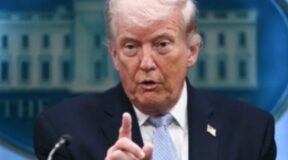
Trump, however, maintained that Iran had “taken some shots” at the vessel and urged regional partners, including South Korea, to support US-led efforts to secure shipping in the Gulf.
Speaking to reporters, he said a diplomatic breakthrough remained possible but warned of escalation if talks fail.
“We’ve had very good talks over the last 24 hours, and it’s very possible that we’ll make a deal,” Trump said. “But if Iran does not honour what is agreed, bombing will resume at a much higher level and intensity.”
The maritime tension comes against the backdrop of a wider conflict involving the United States and Israel, which launched operations against Iran in late February. Iran has since responded with strikes across the Middle East and tightened pressure on shipping through the Strait of Hormuz, a key global oil route.
Iran’s foreign ministry said the US proposal to end hostilities remains under review, while insisting that Washington is trying to force its surrender.
“We will communicate our position after finalising our views,” spokesman Esmaeil Baqaei said.
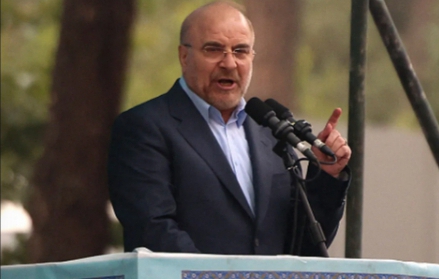
Parliament speaker Mohammad Bagher Ghalibaf accused the US of using “naval blockade, economic pressure and media manipulation” to weaken Iran and push for capitulation.
Despite the hardline rhetoric, indirect diplomatic movement appears to be building. US outlet Axios reported that both sides are close to agreeing on a one-page framework to pause the war and open nuclear negotiations.
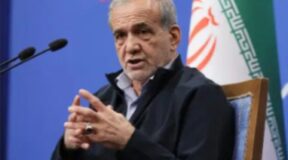
Meanwhile, global reactions continue to intensify. French President Emmanuel Macron urged restraint in a call with Iranian President Masoud Pezeshkian, describing recent attacks on civilian infrastructure near the Strait as “unjustified” and calling for the waterway to be reopened “without delay and without conditions.”
Pezeshkian, however, insisted that any reopening must be tied to the lifting of the US naval blockade, accusing Washington of worsening the crisis through “excessive demands and threats.”
In Europe, France is positioning its aircraft carrier Charles de Gaulle in the region as part of a possible multinational maritime security mission, alongside Britain and more than 40 partner countries.
Markets reacted positively to signs of possible de-escalation, with US and Asian stocks rising and oil prices easing on hopes of a deal.
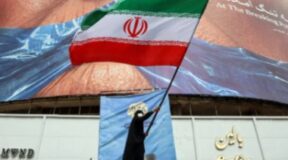
But on the ground in Tehran, public sentiment remains tense. One resident, Azadeh, said the idea of a deal under the current leadership felt uncertain.
“We’ve gone through so much hardship and suffering, and no achievements for the people,” she said. “I just hope things change.”
The conflict has also widened regionally, with Israel carrying out strikes in southern Lebanon that killed a senior Hezbollah commander, further deepening fears of a broader Middle East escalation.
About The Author