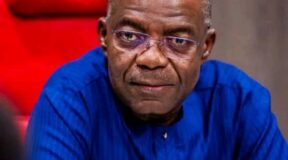
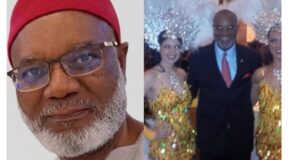
On 1st October 1960, as Nigeria emerged into independence, Sir Walter Nnabugwu Alozie stood at the centre of a historic moment in Southern Ngwa.
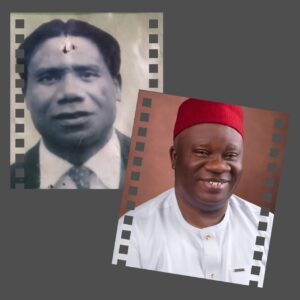
While the Union Jack was being lowered and the green-white-green flag of an independent Nigeria was being raised across the country, Sir Walter Nnabugwu Alozie, then Chairman of the Southern Ngwa County Council in Eastern Nigeria, had the distinction of reading Nigeria’s Independence Address to the people of the council.
It was a defining moment in the history of the people of Southern Ngwa, and a remarkable chapter in the life of a man who had dedicated himself to public service.
Sixty-six years later, the story of that legacy continues. Sir Walter Nnabugwu Alozie was the biological father of Hon. Munachim Alozie, Member of the House of Representatives representing the Obingwa, Osisioma and Ugwunagbo Federal Constituency.
The significance of this connection goes beyond father and son. It is a story of public service across generations.
In 1960, Sir Walter Alozie was entrusted with the responsibility of representing his people at a defining moment in Nigeria’s history. More than six decades later, his son occupies a seat in Nigeria’s National Assembly, representing the same broad community whose people have remained at the heart of the family’s public-service journey.
From the Southern Ngwa County Council of 1960 to the Federal House of Representatives of today, the Alozie name has remained connected with the story of public representation.
The significance of Sir Walter’s role is especially fitting to remember on Nigeria’s Independence Day. Independence was not merely the transfer of political authority; it was also the beginning of a national journey built on the contributions of individuals who served their communities at different levels.
Like father, like son, the legacy of public service continues.
Sir Walter Nnabugwu Alozie was one of those individuals.
And today, his son, Hon. Munachim Alozie, carries that family heritage into a new generation—under a different political system, in a different era, but with the same fundamental responsibility: to represent the people and contribute to the development of the community and the nation.
A father was there when Nigeria began its journey as an independent nation.
His son is today part of the institution that makes laws for that nation.
That is more than a family story.
It is a remarkable thread connecting Nigeria’s independence generation to the generation of today.
About The Author