By Ikeddy ISIGUZO
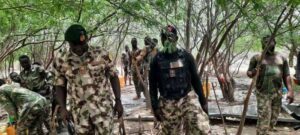
SHAMEFUL. Horrid. Terrifying. Humiliating to our troops. Unbelievable. The list goes on in search of words to qualify the horrendous policies of the Tinubu administration in fighting terrorists who are shrinking Nigeria’s territory, killing Nigerians, our troops and their commanders.
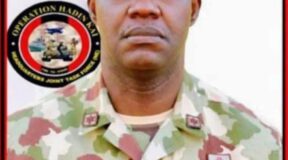
Nigerians are genuinely mourning the loss of our troops and officers in the latest attacks in the North-East which terrorists now over-run with ease due to vacillating policies in Abuja.
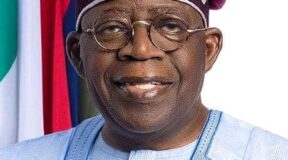
Families are barely coming to terms with their losses when President Bola Ahmed Tinubu chose to highlight the deradicalisation programme for terrorists that graduated 744 former terrorists, as they are called.
What was the hurry in showcasing to the world that government was in good company with those who have contributed to the deaths of our troops and civilians in different parts of Nigeria?
The Commander-in-Chief must be counting the deradiclarisation programme which has achieved little in 10 years ago as a major achievement since there is nothing else to point in his three years of making Nigeria more unsafe.
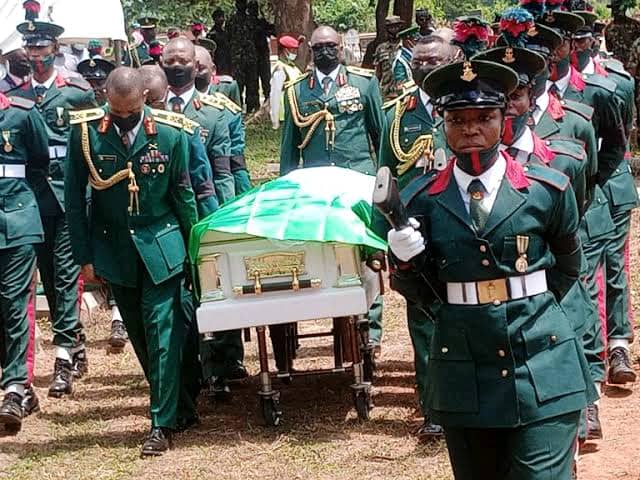
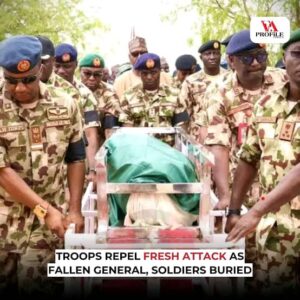
A celebration of terrorists when the nation is in mourning? The disgraceful event was held in Gombe, only 346km from Maiduguri, steeped in mourning over officers and troops buried 24 hours earlier at Maimalari Cantonment Cemetery “with full military honours”.
What was the hurry in honouring the “former terrorists”?
A statement from the military reminded us that, “As the nation mourns these heroes, it is reminded that the freedom and stability enjoyed today come at a profound cost, paid by brave men who placed duty above self and gave everything in service to their fatherland.”
The kidnapping and killing of our people have been reduced to unimportance by the decisions of the Tinubu administration in downgrading the “security and welfare of the people shall be the primary purpose of government,” a constitutional provision, to the “unimportance of the people” being the primary purpose of government.
Officers and troops who fall in battles are no longer honoured.
Why were the national heroes not buried at the National Military Cemetery, Abuja, the premier resting place for military personnel. It holds the graves of high-ranking officials and officers killed in action, serving as a monument for heroes who died in service.
Would their killers in the North-East have felt affronted with a national burial for our troops and officers and their names engraved in the memorial built in 2016, which bears the names of such soldiers as a way of celebrating their sacrifice to Nigeria?
The burial of 17 soldiers killed in Okuama on 14 March 2024 (including Lt. Col. A.H. Ali), four officers and 13 soldiers while on a peace mission, was the last time soldiers who died “in action” were buried at the National Military Cemetery, Abuja. Tinubu, Commander-in-Chief, attended that ceremony.
He has become so embedded in non-kinetic approaches that he would not honour his fallen officers and troops but stamped his authority on a ceremony to announce the unleashing of 744 “former terrorists”, with a good spread, on Nigerians.
And there is no rehabilitation for Internally Displaced Persons, IDPs, who are undergoing different dehumanisations. There are no decisions about their situations –
Lost ancestral homes and land, something that produces humans who cannot express their losses in words is discussed dismissively. The IDPs in Benue, Plateau, Southern Kaduna and indeed other parts of the country were forcefully uprooted from their homes, consequentially losing properties, farmlands and ancestral homes. This has crumbled and broken down their economic base and cultural identity.
Some cases are worse – their lands have been appropriated by terrorists who have renamed them, changed the architecture. Their homelands have been wiped off the surface of the earth in their lifetime.
No more livelihood: The crisis has led many IDPs, especially farmers, to lose their basic means of survival which is farming. There is no land to farm, no skills to get jobs.
Food insecurity and hunger: The attacks and terrorism in Nigeria in general have led to acute shortage of food and malnutrition, especially among the children and pregnant women in IDP camps. The trauma of suffering from hunger when they used to feed themselves well before their current plight has reduced many IDPs to almost sub-humans. How can adults be begging for survival daily?
Poor living condition: Another serious challenge posed by the recurring attacks in Nigeria is overcrowding, inadequate shelter, lack of clean water, and poor sanitation in IDP camps. Who cares after the displaced make it to the camps?
.Health challenge and limited access to care: IDPs suffer from acute but preventable diseases such as chicken pox, malaria, and cholera due to poor hygiene. The poor sanitary conditions are rooted in the poor planning of the camps as temporary facilities. They have become permanent.
Psychological trauma and emotional distress: IDPs who have witnessed the rising wave of attacks, lost their beloved ones and, in camps, endure hardships which lead to depression, anxiety, and long-term mental issues. They are not treated for any trauma.
Disruption of education is another severe factor that has affected the IDPs as a result of this crisis. Where is the future for the young ones?
Insecurity and vulnerability: The IDP camps lack security and are sometimes a major target for further attacks.
Loss of dignity and social identity: Displaced persons are often stripped of their social dignity. They are officially stripped of rights that other Nigerians take for granted.
Dependency syndrome: Prolonged dependency of IDPs on humanitarian assistance can erode self-reliance and initiative, trapping them in cycles of poverty, family separation, lack of government support and durable solutions, uncertain future and prolonged displacement.
While they are treated as if they are the terrorists, their attackers, the terrorists, are rehabilitated and equipped with skills to continue life in whichever way they choose.
IDPs are dumped to a life of indeterminate misery and furtive expectations. Their attackers, the terrorists who have altered their lives, killed their relations are rewarded with better lives, at a Tinubu ceremony that announced this achievement that targets “peace” without justice – and shouts, terrorism pays.
All hail Tinubu, the great Commander-in-Chief as you wonder who he sides in the battles to make Nigeria secure and safe again.
Finally…
ALHAJI Ibrahim Galadima, 78, former Chairman of Nigeria Football Association, as it was then known, passed on Saturday 18 April 2026. Many of the tributes acknowledged his integrity. May the Almighty grant him rest.
BAYO Onanuga is maintained with public funds to speak for President Tinubu, but he is more likely to be heard these days speaking for the taciturn Alhaji Nafiu Bala Gombe who APC has found a worthy distraction for ADC, Africa Democratic Congress. Anyway, Tinubu is so scared of the 2027 election that he dodges national issues that could draw attention to him.
Onanuga to keep busy has aligned with Alhaji Gombe, while still a presidential aide, and at public cost. APC remains innovative in breaking the simplest protocols and laws.
ISIGUZO is a major commentator on minor issues
About The Author