By Wachuku E.D
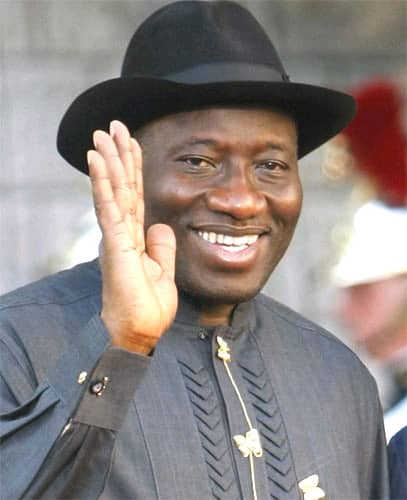
As the 2027 elections approach, permutations are increasing, calculations are at their peak, alignments and realignments are being orchestrated, and leading presidential hopefuls are emerging. However, I would beam my searchlight on former President PGEJ.
The contents of this article are my views and purely based on personal opinion and perception. They carry no malice, disrespect, or disregard. I have basically focused on issues.
As we gravitate towards 2027, and as the present administration is entering its twilight, and as interests and consultations are on the increase and as the polity is getting heated up, my assessment is that for PGEJ, there is a time and a season, 2027 is that time and season. Any presidential ambition by him after 2027 would likely be futile, as the wave of his exploits and influence would have significantly dwindled. It could take another twelve years from 2027 for such an opportunity to re-emerge for him. By then, age would also become an albatross and a possible negation.
However, at this point, and for 2027, age is undeniably an asset for him. His sacrifices are still fresh and resonate in the minds of the people.
PGEJ should not lose track of the fact that if PBAT secures his second term in 2027 as a Southerner, his tenure would end in 2031. Thereafter, the presidency would rotate to the North for eight years, before returning to the South. Political parties always align with where the ruling party has zoned presidency.
Many of the challenges facing PBAT’s administration, ranging from perceived political intolerance to unpopular policies, appear to work in PGEJ’s favor for 2027. I would not include insecurity here, as previous administrations have also faced similar challenges.
At this point in Nigeria’s reality, the mention of PGEJ’s name in the 2027 presidential race could, in my view, trigger a re-emergence and elevation of the political movement that began in the 2023 election, driven by his track record, while still acknowledging the imperfections of his administration.
Should PGEJ decide to run in 2027, any sudden attacks on his family could reinforce the perceptions of intolerance or political witch-hunting of the present administration, thereby increasing his popularity and potentially discrediting the current administration.
PGEJ has one remaining constitutional tenure. PBAT would also have one tenure left by 2027 if re-elected, while HE PO would have the possibility of two tenures if elected. However, HE PO is alleged to have promised a single tenure, something that in practical terms, may not be a reliable guarantee. I have mentioned these three leaders, as they would appear to be the topmost contenders, alongside HE AA, making them four.
From this analysis, PGEJ appears to hold a comparative advantage over PBAT and HE PO, given current realities, though this does not discount the institutional advantages available to a sitting president like PBAT, nor the significant popularity of HE PO.
It is worth recalling that in 2015, a sitting president who sought re-election, with all the paraphernalia of office, was defeated. Therefore, it is not impossible for the same to occur in 2027.
Evidence suggests that Nigeria is gradually shifting toward prioritizing individuals over political parties. Voters are becoming more aware. The 2023 election served as a litmus test. This evolution is not yet Uhuru but Nigerians are increasingly adopting the mindset: collect the money, but vote your conscience.
PGEJ has gained substantial international and national recognition, particularly in diplomacy, peace, and conflict resolution, due to key decisions made during his presidency,
His declaration that his ambition was not worth the blood of any Nigerian, and his peaceful concession after defeat, remain historic benchmarks.
He also demonstrated strong religious conviction by signing into law the bill against same-sex marriage at a critical time, despite international pressures. This reflected personal conviction and sacrifice.
PBAT faces reputational challenges both locally and internationally, alongside current economic policies widely perceived as contributing to hardship and declining living standards.
HE PO enjoys strong national and diaspora support. However, this level of recognition does not yet match that of PGEJ. His strongest opportunity appeared to have been in 2023.
For PGEJ, having one remaining constitutional tenure may serve as a strategic advantage, particularly in gaining acceptance in the North.
At the grassroots level, many Nigerians may view PGEJ as a more viable option, especially if he contests under a party without internal crises or legal baggage.
The current levels of poverty, insecurity, and uncertainty cannot be overemphasized. Nigerians are becoming more politically conscious and are more likely to vote their conscience.
On a final note, candidates must prioritize inward looking economic policies that promote self-reliance, exploration of natural resources, manufacturing of finished goods from natural resources and exportation of finished goods thereby promoting value addition. Rather than the present focus on exportation of raw materials.
Nigeria also needs leadership that will create basic infrastructure that will enhance international partnership, a driver to building assemblage and manufacturing plants in Nigeria, which enhances job creation and development.
There must also be commitment to true federalism and reduced overcentralization at the center.
A single six-year tenure across all offices should be considered to improve governance focus and reduce costs.
A four-year tenure often results in only about two productive years due to transitions and elections. A six-year tenure would improve efficiency.
Whoever emerges in 2027 should push this reform.
From my stable of personal knowledge and analysis,
Wachuku E.D. (B.Sc, Pol. Sci., M.Sc., Int’l. Rel., Ph.D. Hon., Ph.D., Dip. Studies, I.V)
About The Author