By Kyrian Chikay,
News Mirror Reporter, Accra Ghana
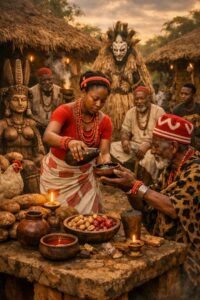
When we speak of Southeastern Nigeria, we speak of the Igbo people — a community whose heartbeat resounds in yam festivals, palm wine rituals, masquerade dances, and the sacred bond between food, faith, and talent. Their story is not merely one of survival, but of how nourishment, spirituality, and ability form a covenant with God, ancestors, and the land.
The Igbo homeland stretches across Anambra, Enugu, Imo, Abia, and Ebonyi states, a lush rainforest region where rivers, fertile soil, and palm groves sustain life. Here, food is more than sustenance — it is identity, tradition, and spirituality.
The Igbo people are defined by their profound connection to Chukwu (Chi‑Ukwu), the Supreme God. For them, life is not random — it is a covenant with the divine, expressed through food, spirituality, tradition, and talent. Every Igbo carries a Chi (personal spirit), a spark of God guiding destiny. This belief makes their culture one of the most spiritually rich in Africa, where God is both universal and personal, shaping resilience, creativity, and power.
Deities and Spiritual Forces
– Chukwu (Supreme God): Source of destiny and blessing.
– Chi (Personal Spirit): Divine spark guiding each individual’s path.
– Ala (Earth Goddess): Guardian of morality and fertility.
– Amadioha (Thunder God): Enforcer of truth and justice.
– Ikenga (Symbol of Achievement): Totem of strength, courage, and success.
– Ancestors: Protectors who empower the living. This covenant makes every act — farming, trading, eating, celebrating — a spiritual act of power.
Food is central to Igbo spirituality. Yam, palm oil, kolanut, and palm wine are not just meals — they are sacred offerings that bind the people to God and their ancestors.
– Yam: Celebrated in the New Yam Festival (Iri Ji) as thanksgiving to God and Ala.
– Palm Oil: Symbol of life force, used in cooking and rituals.
– Kolanut: Offered in ceremonies as a covenant of peace under God’s watch.
– Palm Wine: Shared at weddings, funerals, and negotiations, binding communities together.
Their soups are both nourishment and medicine:
– Ofe Nsala (White Soup): Represents purity, served at sacred occasions.
– Ofe Oha: Ties families to seasonal cycles, its leaves seen as gifts from the earth.
– Ofe Onugbu (Bitterleaf Soup): Cleanses and heals, embodying medicinal wisdom.
For the Igbo, to eat is to commune with the divine. Food is medicine, food is covenant, food is power.
Igbo traditions are living expressions of their covenant with God:
– Masquerades (Mmanwu): Embody spirits and ancestors, reminding the living of their roots.
– Harvest Rituals: Tie farming to divine order, ensuring balance with the land.
– Oral Traditions: Proverbs, folktales, and songs use food and faith metaphors to teach resilience and morality.
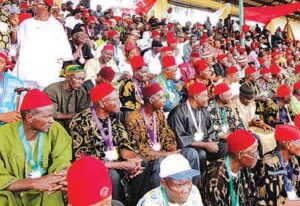
Though historically indigenous to Nigeria, many Igbo embrace a symbolic connection to Israel. Oral traditions, religious parallels, and missionary accounts have fueled this belief:
– Circumcision on the eighth day.
– Reverence for a supreme God (Chukwu).
– Purity laws resembling Hebrew customs.
While modern studies affirm their African roots, the Israel connection remains a spiritual identity, reinforcing their sense of chosen destiny. Beyond spirituality, the Igbo are renowned for their entrepreneurial spirit, creativity, and resilience:
– Entrepreneurship: Masters of trade and business across Africa.
– Craftsmanship: Skilled in bronze, wood carving, textiles, and beadwork.
– Agriculture: Experts in yam cultivation, palm oil, and herbal medicine.
– Music & Dance: Highlife music, drumming, and masquerade artistry.
– Education & Leadership: Excelling as doctors, engineers, lawyers, and global leaders.
– Innovation & Adaptability: Turning challenges into opportunities.
The Great Abilities Every Igbo Possesses
– Resilience: Rebuilding and thriving after hardship.
– Community Spirit: Kinship and collective progress.
– Negotiation & Strategy: Natural talent for diplomacy and trade.
– Creativity: Turning culture into art and innovation.
– Faith & Destiny: Confidence rooted in their Chi and covenant with God.
As Africa seeks unity and renewal, the Igbo story offers a model: food as medicine, faith as culture, tradition as power, and talent as destiny. To eat well is to live well. To honor tradition is to honor ourselves. To build with talent is to build the future. And to share food is to share the divine.
About The Author